
Miracle Tree Improves Nutritional and Immune Status of HIV Patients
https://www.carstens-stiftung.de/artikel/wunderbaum-verbessert-den-ernaehrungs-und-immunstatus-von-hiv-patienten.html
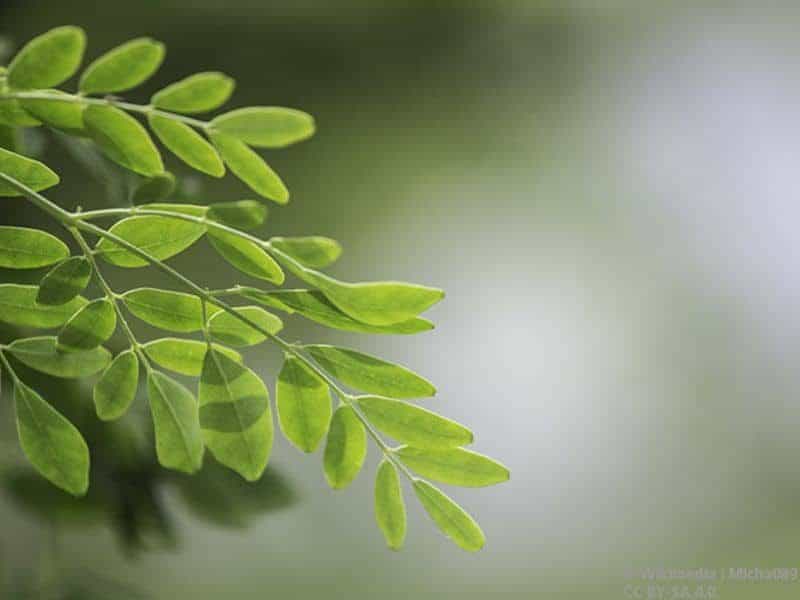
by Daniela Hacke, M.A.
An extract from Moringa tree leaves can provide supportive benefits in the antiretroviral therapy of HIV patients with poor nutritional status.
Weight loss and malnutrition are typical accompanying symptoms of an HIV infection, leading to a deterioration of the overall condition, especially the immune status of affected individuals. Immunocompromised HIV patients who are also underweight are at risk of developing severe secondary infections and ultimately succumbing to them. Antiretroviral therapy, a medicinal treatment that inhibits but does not stop HIV replication, helps to restore the disease-impaired immune metabolism of HIV patients. To enhance the success of antiretroviral therapy, experts recommend a wholesome, predominantly plant-based diet rich in nutrients such as amino acids, unsaturated fatty acids, and antioxidants.
While the supply of necessary nutrients is not an issue in Western countries, HIV-infected individuals in Africa, where two-thirds of all HIV-infected people live, are confronted with the problem of under- and inadequate food supply, which can have life-threatening consequences.
In Kinshasa, Congo, this status quo prompted scientists to conduct a study comparing the effects of a powder made from the leaves of the native Moringa tree (Moringa oleifera Lam.), also known as the horseradish tree due to its high content of mustard oil glycosides, on the BMI (Body Mass Index) and immune status of HIV-infected patients with those of standard nutritional counseling. [1] The Moringa tree was chosen as a herbal intervention because it not only has a high content of unsaturated fatty acids, proteins, amino acids, minerals, and vitamins, but also, as a native plant, is readily available. Since almost all parts of the Moringa tree (roots, leaves, seeds, flowers, and pods) can be utilized, it is often referred to as the Miracle Tree. The powder from Moringa tree leaves used in the study contained, among other things, phytosterols, soluble minerals and trace elements, as well as a high proportion of saturated and unsaturated fatty acids and proteins.
The 60 HIV-infected and antiretrovirally treated study participants were randomly assigned to the intervention group and the control group. Participants in the intervention group were instructed to add 30 grams of Moringa powder to their three daily meals over a period of six months and consume it throughout the day. Subjects in the control group received standardized nutritional counseling regarding a healthy, balanced, and energy-rich diet using simple means. The primary endpoints consisted of an increase in Body Mass Index (BMI) and various biochemical markers, which were measured at baseline, after three, and after six months. The secondary objective included the development of BMI considering sociodemographic and economic criteria such as age, education, employment, and living environment, as well as differentiation by clinical and biological characteristics, which took into account the classification into the WHO staging of HIV disease (Stages 1 and 2: early stage, Stages 3 and 4: advanced stage) and the total duration of antiretroviral therapy.
After six months, patients in the Moringa group showed a significantly higher increase in BMI of 2 kg/m2, while only 1 kg/m2 could be achieved in the control group. Furthermore, the albumin level in the intervention group increased from 3.3 g/dl at baseline to 3.9 g/dl, whereas it did not change in the control group. Albumin is an important protein in the bloodstream that binds and transports endogenous and exogenous substances such as fatty acids, enzymes, amino acids, electrolytes, and also medications. However, no significant difference was observed between the two groups regarding the number of CD4-positive T-cells and viral load.
Assessment:
Due to its good availability, the use of Moringa leaf powder, compared to a sole dietary change, proves to be an inexpensive and effective supplement to antiretroviral therapy for increasing Body Mass Index and improving immune status. Malnutrition and underweight, commonly observed in HIV patients, can be counteracted by supplementation with Moringa leaf powder, which has a particularly high nutrient density and considerable protein content.
An improved nutritional status generally plays an important role for a stable immune metabolism. However, this study could not demonstrate a significant increase in relevant blood values compared to baseline. Only albumin levels could be clinically significantly increased by the intake of Moringa powder.
Regarding a potential interaction with antiretroviral substances such as Nevirapine, a recently published experimental study gave the all-clear. [2] The Moringa leaf extract tested in the laboratory experiment proved to be harmless concerning its influence on the pharmacokinetics of the active ingredient Nevirapine. However, given an increased risk of renal insufficiency due to the intake of protein-rich Moringa leaf powder in the context of antiretroviral therapy, regular kidney function tests should be performed.
However, further studies are mandatory to determine the ideal therapeutically effective dosage and the immunovirological effect of Moringa leaf powder.